Terminal Point On Unit Circle Calculator . Enter the angle in the input field. The procedure to use the coterminal angle calculator is as follows: Angle theta is in standard position. If (8,15) is on the terminal ray from brainly.com The procedure to use the coterminal angle calculator is as follows: T = 7 π 6 lies in quadrant lll so its reference angle is its distance. Use this geogebra applet to see the (x, y) coordinates that correspond to different angles on the unit circle.
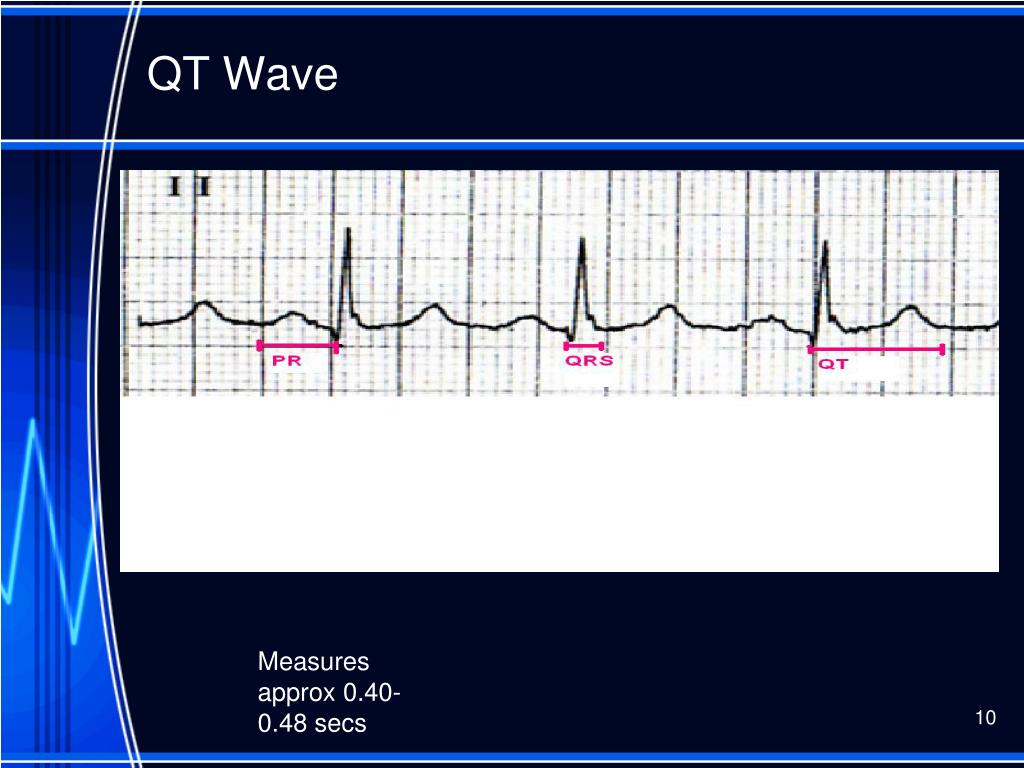
Small Box Method Calculating Heart Rate. The ecg has a grid with thick lines 5 mm apart (= 0,20 second) and thin lines 1 mm (0,04 second). We are focusing only on calculating the heart rate based on the boxes in this presentation.
PPT Pacers, ablation, cardioversion, telemetry, Intro to ACLS from www.slideserve.com
Image from mcgill virtual cardiology. 1 small square (1mm) = 0.04 sec (40ms) 5 small squares (5mm) = 1 large square = 0.2 sec (200ms) 5 large squares = 1 second. 60 seconds (one minute) / 0.2 seconds (one.
Calculating Heart Rate For A Normal Sinus Rhythm.
Each large block contains 25 squares. Each small box is 1 mm x 1 mm in size (width represents 0.04 s) each large box (5 small boxes per large box) is 5 mm x 5 mm in. The value of the heart rate is equal to 300 divided by the number of large squares + remaining small squares multiplied by 0.2.
At Standard Paper Speed Of 25Mm/Sec,.
For example, if we count 45 small boxes. Sinus bradycardia will have a heart rhythm that is regular, but less frequent. Observe that the pr interval is>normal.
How To Calculate Heart Rate Small Box Method.
Using the 1500 method.begin by counting number of small squares between two consecutive r waves and divide 1500 by that number. The big box method is the third common way to evaluate heart rate (the 6 second and small box methods being the others). Heart rate is 300 divided by.
The 1500 Method Is Very Similar To The 300 Method For Calculating Heart Rate On Ecg.
1 small square (1mm) = 0.04 sec (40ms) 5 small squares (5mm) = 1 large square = 0.2 sec (200ms) 5 large squares = 1 second. So the heart rate is 60 bpm. Count the number of small boxes.
60 Seconds (One Minute) / 0.2 Seconds (One.
With the 1500 method, you count the number of small boxes. The speed of a typical ekg reading is 25 mm/sec. In this video, i demonstrate how to use the big box method (aka the 300 method) to determine the heart rate on an ecg.


Comments
Post a Comment